You may have noticed some silence as of late, on flavorfull. For that, I am truly sorry. I won't bore you with my long list of excuses because, mostly, the excuses amount to me getting home at 8 or 9 and feeling very tired and incapable of cooking, photographing and writing about a meal. A lot of times I'm quite tempted to simply order Thai food again from the place around the corner. (A lot of times, I give into that temptation, too.)
I felt, at first, ashamed to admit this, given my love for cooking. But then I thought, it's possible that my readers wish they could cook more too. I mean, I cannot be the only girl in the world who loves to cook but consistently sees gourmet groceries go bad in her fridge. So, with that in mind (and just in case you've struggled with something similar) let me offer you my new favorite pantry staple recipe.
This meal is made with almost all things you can keep in your pantry, so if all of your ingredients go bad during a busy week or you're so busy you can't find time to go grocery shopping for proper produce you can still eat very, very well. Mujaddara also gets better with a little time, so it's ideal to make this on a Sunday and bring it to work as lunch on, say, a Tuesday. Plus, when paired with steamed green veggies, it's a very nutritious meal.
Mujaddara
Adapted by Alexandra Rogers from recipe on Food52.com
Ingredients
3/4 cup green or brown lentils
1 teaspoon salt
1 cup brown rice
2 Tablespoons butter
3 Tablespoons olive oil
6 cups thinly slice onions (about 3 medium onions)
Recipe
Cook rice and lentils according to instructions, set aside.
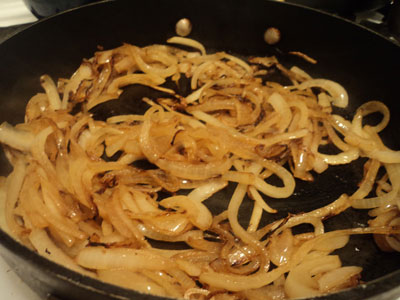
Divide onions in half. Heat oil in a large saute pan, and add half of the sliced onions once the oil is hot. Cook onions over medium low heat for 10-15 minutes, until caramelized (adding oil in small amounts if pan dries out). Repeat process with second batch of onions (alternatively, if you have two large saute pans you can do this step at once on two burners).
In a large bowl, combine rice, lentils and onions and stir to combine. Serves 4.
Showing posts with label Healthy. Show all posts
Wednesday, February 8, 2012
Friday, December 30, 2011
Superfood Soup (Sweet Potatoes, Kale, Lentils)
Posted by
Alexandra Rogers
Although a warming soup made of super foods needs little excuse, here are mine: I have a cold right now. It's winter. Oh, and also, we just got done with Christmas and are heading into a time of year where New Year's Resolutions (and a gym membership for this girl) are looming.
Time for a super healthy soup.
This soup is incredible. The three main ingredients kale, sweet potatoes, and lentils are all considered "super foods."I just don't think you can go wrong here. Low in fat, high in everything good.
As an added bonus, this soup is fairly quick to prepare and incredibly simple. If you prep all the ingredients beforehand you really just have to throw things in and set a timer. Make sure to make enough for leftovers, as you'll definitely want them . The end result is garlicky, healing, and apparently--unlike most things I like when I'm sick--very, very good for you!
Red Lentil Soup with Sweet Potatoes and Kale
By Jen, from Eating Clean
Ingredients
1 tablespoon olive oil
1 medium white or yellow onion, chopped
2 cloves garlic, finely chopped
5 cups water
1 cup red lentils, rinsed and drained
2 teaspoons sea salt
1 1/2 teaspoons ground coriander
1 1/2 teaspoons bittersweet paprika
3/4 teaspoon ground cumin
12 ounces fresh sweet potatoes, peeled and cubed (2 cups)
4 cups chopped fresh kale leaves (stems removed)
Freshly ground black pepper
1 tablespoon olive oil
1 medium white or yellow onion, chopped
2 cloves garlic, finely chopped
5 cups water
1 cup red lentils, rinsed and drained
2 teaspoons sea salt
1 1/2 teaspoons ground coriander
1 1/2 teaspoons bittersweet paprika
3/4 teaspoon ground cumin
12 ounces fresh sweet potatoes, peeled and cubed (2 cups)
4 cups chopped fresh kale leaves (stems removed)
Freshly ground black pepper
Recipe
In a large pot or dutch oven, heat oil over medium heat. Add onions and cook for approximately 5 minutes. Next, add garlic, cooking for about 30 seconds and stirring to combine with onions. Add all spices and salt, stir to combine.
Next, add lentils and stir to coat with spices, onions and garlic. Pour in 5-7 cups of water (depending on how thick you like your soup--add less water for thicker soup). Bring to a boil, then reduce to a simmer and simmer, uncovered, for 10 minutes. Add sweet potatoes and simmer until tender, about 10-12 minutes, then add kale and simmer for about 5 minutes. Crack fresh black pepper lightly over the soup and serve hot.
Friday, November 4, 2011
Zucchini & Chickpea (Quick) Curry
Posted by
Alexandra Rogers
The Internet has significantly, and irreversibly, changed the way we communicate, share information, and ultimately, the way we live. It has also, seemingly, changed the way we cook.
In Tweet Me Right: The Joy of Cooking in a Digital World, Fran Brennan writes about the changing nature of recipe exchange and food community. The Internet has stimulated the growth of a large and passionate food community. It allows us to connect to people, places and even ideas that we wouldn't otherwise encounter.
Opening a browser can open a world of culinary possibilities. So, how do you navigate this new world?
Thankfully, there are a number of sites that stimulate food community and make navigation of the online food space a bit easier. Amanda Hesser and Merrill Stubs created Food52.com to "bring together people who care about food." If Food52 stimulates conversation and creation in the online food community, it's offspring gojee.com provides users with a way to navigate that conversation.
Gojee.com allows users to enter an ingredient they have on hand (or that they're craving), and ingredients they'd like to avoid. After that information is entered, the site suggests recipes that fit your previous specifications. Did I mention it does that with food-porn images of the finished recipe? (Warning: You will walk away from gojee.com with your stomach growling). When you are tempted by a recipe, you click through and end up on the food blog that originally posted the recipe. From what I've seen, there aren't links to allrecipes.com, or more generic cooking sites. Rather, gojee.com directs users to further explore to food community.
This is why technology inspires me. This type of site helps to foster community engagement and new discoveries online. Between complete strangers. Tell me you're not amazed by that. The most interesting part of gojee.com, though, is not the new discoveries it provides. The most interesting thing about the site is that it makes my life in the kitchen a lot more like my grandmother's.
See, as a Gen Y'er and daughter of an enthusiastic cook, I was raised in a world where the cooking process went like this: find a recipe, buy ingredients for that recipe, cook that recipe.
My grandmother, though, and her mother before her, followed this cooking process: look at ingredients you have, find a recipe that utilizes those ingredients, cook that recipe.
Gojee.com allows, and encourages, cooks to use what they already have. This isn't surprising, considering the concept of using what you have is back in style (we're calling it sustainability now). Think of sustainability in the kitchen as your grandmothers old broach, suddenly appearing--a bit re purposed--in the September issue of Vogue.
Why am I serenading you about my love of technology while showing you pictures of zucchini, you ask? Well, I had zucchini on hand a few weeks ago--a lot of zucchini. And, I discovered gojee.com, which led me to the 15 minute curried zucchini recipe from fresh 365. Find it adapted below, courtesy new technology.
Zucchini & Chickpea (Quick) Curry
By Alexandra Rogers, adapted from fresh 365
Ingredients
3 Tablespoons olive oil
1 large (white) onion, chopped
4 large garlic cloves, minced or crushed
2 teaspoons cumin seeds
3 medium zucchini, cut into 1/2" semi circles
8 oz. garbanzo beans (chickpeas)
2 teaspoons ground cumin
2 teaspoon curry powder
1/2 teaspoon turmeric
1/2 teaspoon teaspoon ground ginger
1/8 teaspoon cinnamon
handful of chopped cilantro
Recipe
In a small bowl, mix ground cumin, curry powder, turmeric, ground ginger and cinnamon together. Set aside.
Heat oil in a large saute pan, over medium-high heat. Add the onions, garlic and cumin seeds and cook for about 5 minutes, until the onions become translucent and start to brown*. Add Zucchini, and spices. Stir to combine. Cook for approximately 6 minutes (until zucchini is tender when stabbed with a fork and begins to brown a bit). Add garbanzo beans and stir to coat with spice mixture. Add salt to taste, and cook for another 5 -6 minutes. Remove from heat, stir in cilantro, and serve with brown rice. Serves 4-5.
*To get vegetables to brown when sauteing, don't stir too often. Extended contact between the hot pan and the surface of the vegetable is needed for vegetables to caramelize (brown). Many cooks struggle with this concept, feeling the must stir continuously so everything cooks evenly and doesn't burn. But, if your goal is caramelization, you need to step back and let the vegetables hang out with the hot pan without stirring for a few minutes.
Thursday, September 29, 2011
Buttermilk Biscuits
Posted by
Alexandra Rogers
This weekend, I read a piece by Mark Bittman in The New York Times, detailing the costs of eating nutritious, home-cooked meals versus eating out. According to Bittman, many Americans explain the high rates of obesity in this country by relaying the "fact" that it's cheaper to eat at fast food restaurants than to buy decent, healthy food elsewhere. Using an especially great infographic, Bittman shows us that this "fact" is really more of a myth. After all, feeding a family of four a meal of potatoes, simple salad and roast chicken costs less than half the price of feeding that same family at McDonald's.
(via)
So why the nationwide obsession with the golden arches? One reason, among many, is that Americans aren't cooking. Time in the kitchen is seen as grueling or impossible, rather than healthy, simple or relaxing.
I promise you, these buttermilk biscuits are relevant to the discussion. This recipe is one of those super easy and incredibly rewarding recipes that makes you wonder why you don't spend more time in the kitchen. I grew up waiting with baited breath for these to come out of the oven, and I have such lovely memories of pairing them with a bowl of soup on cold evenings. It is one of of those recipes, in fact, that made me love cooking (and clearly, I've loved it ever since). Also, the recipe I've posted (and that I frequently use) is from Mark Bittman himself. Because he really is a fabulous guy (and a good tipper, which I learned from serving him when I was a waitress here) with simple recipes and a great writing voice.
Make the biscuits. Then, if you're feeling the urge for an egg McMuffin, fry up an egg and some bacon, stick a slice of cheddar on top and shove the whole combo into one of these biscuits. Problem solved.
Buttermilk Biscuits
By Mark BittmanIngredients
3 cups flour
2 Tablespoons sugar
4 teaspoons baking powder
1 teaspoon salt
1 teaspoon baking soda
1 1/2 sticks of butter, cold
1 cup buttermilk
Recipe
Preheat oven to 425 degrees Fahrenheit.
In a medium bowl, combine flour, sugar, baking powder, salt and baking soda. Mix together thoroughly.
Then, cut cold butter into Tablespoon size chunks. Add the butter to the flour mixture and use your fingers to rub the mixture together until it resembles small peas--essentially you use your fingers to combine the flour and butter into a crumb like mixture.
Stir the buttermilk in with a wooden spoon, stirring until just combined.
Drop the dough in large spoonfuls onto an ungreased baking sheet and bake for 15 minutes, or until golden.
*If you're interested in this cause, there are quite a few groups across the country that are working to stimulate a renewed interest in the kitchen. From groups that teach children to cook and grow gardens in urban spaces, to groups that put former gang members to work baking bread, there are a lot of ways to get involved.
Thursday, September 8, 2011
Garden Fresh Spaghetti
Posted by
Alexandra Rogers
During a recent visit to the bookstore, I picked up Alone in the Kitchen with an Eggplant. The book features a collection of short essays (which end with recipes) about cooking and eating alone.
One of the first essays I read in the book was by Amanda Hesser. She talked through the meal she made herself one night when her significant other was out of the house. She made a beautiful point about the fact that we often don't cook well for ourselves when we cook only for ourselves. I've definitely gotten home to an empty house and thrown a microwave dinner in more times than I can count. And that's a little funny, if you think about it, since I am obsessed with food and cooking.
Hesser made a point that cooking a great meal for just you is a way of respecting yourself. I like this logic a lot, and so today I'm offering up a recipe that is meant only for one person (though obviously you can double it if you like) and that capitalizes on the best your garden or green market currently has to offer.
My mother taught me this combination after plucking fresh tomatoes and basil from her garden one day this summer, and mincing some garlic she'd picked up from the green market earlier that day. It is the epitome of fresh comfort food. (Note, do remove the skins from the tomatoes--it's a neat trick to learn, especially because skinless tomatoes produce a sweeter sauce, with no bitter taste coming in from the skins.)
Garden Fresh Spaghetti
By Alexandra Rogers
Ingredients
2 Tablespoons extra virgin olive oil
4 plum or roma tomatoes, skins removed
3-4 cloves of garlic, minced
1/3 cup roughly minced basil
1 serving of your favorite type of spaghetti noodle (usually 1/8 the box)
salt to taste
grated parmesan cheese (optional)
Recipe
Bring water to boil in a medium pot. Once water is boiling, add in spaghetti and cook for several minutes, until it has reached your desired consistency. Pour pasta into a colander to drain the water and set aside.
Roughly dice the skinless tomatoes.
Heat extra virgin olive oil in a medium chef's pan, over medium/medium-high heat. Once the oil is hot, add minced garlic and cook for 2 minutes. Then, add the diced tomatoes and stir to combine. Cook tomatoes and garlic together for about 3 minutes. Add the cooked spaghetti noodles (I used capellini) and stir to coat pasta in tomato sauce. Add minced basil and salt to taste. If using parmesan, add before serving.
Serves 1.
Sunday, August 28, 2011
Pesto
Posted by
Alexandra Rogers
If there is ever a time to make fresh pesto, it's now. Fresh basil is abundant at green markets and grocery stores everywhere, and better yet--it's cheap. Fresh pesto simply screams summer to me. Plus, it's very easy (and quick) to make, and it's one of those dishes that's sure to impress just about anybody you serve it to. Confession: I get pretty impressed with myself every time I make it.
Okay, so here's what you do. Go get yourself some basil. Grab some from your garden, green market or grocery store. You're going to need a lot of it. Note: pesto (without cheese) freezes well. If you'd like to freeze your pesto for use later in the year, simply blanch the basil leaves before putting them in the food processor, continue with the recipe and freeze the finished product in jars).
Grate some parmesan cheese--you'll need it a bit later in the recipe. Toast some pine nuts. During this step, resist all urges to turn your back. You will burn the pine nuts if you don't give them your full attention. While you work, sing along to your favorite music and think about how much you love summer.
The next step is very easy. Throw everything except the cheese into the food processor. Combine it well. Then toss it with some pasta (I like it best with Penne noodles), cheese and vegetables. Or freeze it. Or use it on a salad. Most of all, enjoy this pesto along with the last, ever so sweet, days of summer.
Pesto
Adapted by Alexandra Rogers, from Mark Bittman
Ingredients
4 cups basil leaves, washed and dried4 medium cloves of garlic
4 Tablespoons toasted pine nuts
1/2 cup extra virgin olive oil
3/4 teaspoon salt
1 1/2 cups of parmesan
Recipe
In a food processor fitted with the blade attachment, combine basil, garlic and pine nuts. Scrape sides of the food processor with a rubber scraper and make sure ingredients are well combined and chopped. Add the olive oil slowly with food processor running.
It's likely you won't use the full 1/2 cup of olive oil, so add enough to get the pesto to a consistency that is looser than paste but not overly oily. I usually use about 1/4 cup + 2 Tablespoons olive oil in total.
Turn off the food processor and dip a spoon into the pesto. Now, taste the pesto! It will taste like it needs salt. At this point, add a sprinkling of salt (far less than a teaspoon) and combine. This is the "salt to taste" step that can be somewhat confusing. When making pesto, be sure to under salt a bit since you'll be adding salty cheese later in the dish that will carry those flavors through all the way.
Once salt is added, your pesto is ready to use. Toss with a pasta of your choice and add the parmesan cheese until thoroughly combined and serve. This makes enough pesto to cover 4-5 cups of pasta.
You can also use the pesto as part of salad dressings or over vegetables. More specific serving suggestions will be coming your way soon!
Monday, July 25, 2011
Quick Mango Salsa
Posted by
Alexandra Rogers
People, it is hot in New York City. Waiting for the train is a sweatier affair than usual, and it takes all of two seconds of outdoor time to rid your whole body of a day spent in air conditioning. On Friday, the heat index didn't dip below 100 degrees fahrenheit until after 10pm.
The stifling heat in New York City is relevant because I was going to post a baking related recipe. But, quite frankly, I think it's unwise to heat up an oven right now.
So instead, I give you the easiest mango salsa ever. No heat required. Barely any sweat required. Just chop some things up and put them in a bowl! Mix them together and you've got a fancy and gourmet-seeming garnish for just about anything. I like to serve it along side baked or sauteed white fish (like tilapia or halibut). It's good on blue corn chips, too. And, I won't lie, I've had multiple dinner guests finish it out of the bowl with a spoon. That is never a bad sign. Happy summer, and good luck surviving the heat wave!
Ingredients:
1 mango, diced into 1/4" cubes
1/2 small red onion diced small
2 Tbs cilantro, minced
1/4 tsp chile powder
Juice of one small lime
Recipe:
Combine mango, red onion, cilantro and chile powder (to taste). Sprinkle lime juice over and combine well with hands or two spoons.
Makes 4-6 servings.
The stifling heat in New York City is relevant because I was going to post a baking related recipe. But, quite frankly, I think it's unwise to heat up an oven right now.
So instead, I give you the easiest mango salsa ever. No heat required. Barely any sweat required. Just chop some things up and put them in a bowl! Mix them together and you've got a fancy and gourmet-seeming garnish for just about anything. I like to serve it along side baked or sauteed white fish (like tilapia or halibut). It's good on blue corn chips, too. And, I won't lie, I've had multiple dinner guests finish it out of the bowl with a spoon. That is never a bad sign. Happy summer, and good luck surviving the heat wave!
Ingredients:
1 mango, diced into 1/4" cubes
1/2 small red onion diced small
2 Tbs cilantro, minced
1/4 tsp chile powder
Juice of one small lime
Recipe:
Combine mango, red onion, cilantro and chile powder (to taste). Sprinkle lime juice over and combine well with hands or two spoons.
Makes 4-6 servings.
Saturday, July 16, 2011
Moroccan Couscous
Posted by
Alexandra Rogers
Most college kids eat spaghettio's, mac and cheese and chinese take-out. While those were all star players in my college diet as well, boxed couscous was my go-to meal. Now, I've got nothing against the Near East Couscous that used to line my shelves in college--I ate it at least three times a week for dinner (paired with a vegetable when I was feeling responsible)--but boxed meals tend to be high in sodium.
Once I discovered how super easy and delicious it is to make couscous from just the grain itself and some oil and spices well...there was no turning back. This recipe is a great introduction to the technique. Make it a few times and you should be able to improvise from there, by changing up the spices or what you mix into the cooked couscous. Enjoy!
Moroccan Couscous
Adapted by Alexandra Rogers, from Moroccan Couscous-stuffed Chicken Breasts by Alison Attenborough, published on Food & Wine
Ingredients
2 Tablespoons oil
1 dash of cinnamon
1 teaspoon coriander
1 teaspoon cumin
2/3 cups plain couscous
1 cup vegetable stock
6-8 small dried apricots (use unsweetened, natural), cut into small, rough pieces
3/4 cup pine nuts, toasted
2 Tablespoons fresh parsley, chopped
Recipe
1. Bring vegetable stock to a light boil in a small pot.
2. Heat oil over medium-high in a medium-sized pot. Add cinnamon, coriander and cumin and let cook for one minute.
3. Remove the medium pot from heat and add couscous. Stir the couscous until thoroughly coated with the oil and spice mixture, then pour the boiling vegetable stock over the couscous, cover tightly and set aside for 5 minutes.
4. Prepare parsley, pine nuts and dried apricots. When the couscous has absorbed all the liquid, stir parsley, pine nuts and dried apricots in and serve. Serves 4.
Once I discovered how super easy and delicious it is to make couscous from just the grain itself and some oil and spices well...there was no turning back. This recipe is a great introduction to the technique. Make it a few times and you should be able to improvise from there, by changing up the spices or what you mix into the cooked couscous. Enjoy!
Moroccan Couscous
Adapted by Alexandra Rogers, from Moroccan Couscous-stuffed Chicken Breasts by Alison Attenborough, published on Food & Wine
Ingredients
2 Tablespoons oil
1 dash of cinnamon
1 teaspoon coriander
1 teaspoon cumin
2/3 cups plain couscous
1 cup vegetable stock
6-8 small dried apricots (use unsweetened, natural), cut into small, rough pieces
3/4 cup pine nuts, toasted
2 Tablespoons fresh parsley, chopped
Recipe
1. Bring vegetable stock to a light boil in a small pot.
2. Heat oil over medium-high in a medium-sized pot. Add cinnamon, coriander and cumin and let cook for one minute.
3. Remove the medium pot from heat and add couscous. Stir the couscous until thoroughly coated with the oil and spice mixture, then pour the boiling vegetable stock over the couscous, cover tightly and set aside for 5 minutes.
4. Prepare parsley, pine nuts and dried apricots. When the couscous has absorbed all the liquid, stir parsley, pine nuts and dried apricots in and serve. Serves 4.
Thursday, May 19, 2011
Tofu & Glass Noodle Stir Fry
Posted by
Alexandra Rogers
I was nine years old when my family moved to Verona, WI (near Madison, WI). On our first visit to my elementary school we met another family who had just moved to the area from England. My mother became close friends with the mother from the other family, Harwinder, in mere moments. Ever since, they've been more than family friends. To me, they are simply family.
You're probably wondering what this has to do with the mung bean noodles pictured above, right? I'm getting to it. Harwinder grew up in Malaysia and she makes, without exception, the best Indian, Malaysian, and Chinese food I have ever eaten. In my entire life. This woman is a talented, talented cook.
Since I walked home from school with her kids and hung out at their house "doing homework" after school (read: giggling about boys with their middle daughter, listening to English pop music and making a life-long friend), I often invited myself got invited to stay for dinner. I'm no fool. I knew even then that I was in the presence of culinary talent. I was also a vegetarian. Which (finally) brings me to my main point. This dish is based off of something Harwinder made for me a lot. It's vegetarian--vegan, in fact--and, to boot it can be made gluten free if you use La Choy brand soy sauce (I picked up this weird little factoid from working at a sushi restaurant in NYC). Plus, most importantly, it tastes really good.
Tofu & Glass Noodle Stir FryBy Alexandra Rogers, Inspired by Harwinder Dowd
Ingredients
Marinade + Tofu
1 (10 oz) block of high protein tofu, super firm
1/3 cup low sodium soy sauce
1/3 cup water
4 teaspoons chili garlic sauce
Stir Fry
4 bundles of cellophane noodles (you can find them in the Asian food aisle of most large grocery stores)
3 Tablespoons oil (I used sunflower oil, but you can use whatever you like)
4-5 medium cloves of garlic, minced
1 (8 oz) bag of snow peas
3/4 cup bean sprouts
1 Bok Choy
Recipe
Marinade + Tofu
1.Chop tofu into squares that are 1/4" thick and 1" wide and long.
2. In a tupperware container combine soy sauce, water and chili garlic sauce. Add tofu and shake to coat evenly.
3. Marinate for at least 20 minutes. Overnight in the fridge is fine as well.
*BEFORE YOU BEGIN-I own a very large saute pan and I still had to make this recipe in two batches. This means you might want to prep everything you have but only make a 1/2 recipe at a time, so as not to overcrowd the pan and stop it from cooking properly. Please let me know if you have any questions about this.*
Stir Fry
1. wash and dry the bok choy. Separate the leaves from each other. Then, with a knife, separate the leafy, green part of the bok choy from the firm, white part. Chop the bok choy leaves into approximately 1" pieces and slice the stems into 1/2" pieces (like you would slice a carrot). Set aside.
2. Fill a medium pot with water and bring to a boil. When water is boiling rapidly (in other words, the bubbles are large and popping up fiercely) add the mung bean noodles. You might have to use a wooden spoon to shove them in as they are rather stiff and oddly shaped. Once the noodles are in, cook for only three minutes, then drain and set aside. The noodles should be white and semi-translucent.
3. Coat the largest pan you have with the oil of your choice and bring to medium-high heat. Once the pan is hot, add garlic--you should hear it sizzle. Let garlic cook for 1-2 minutes, stirring frequently.
4. Add bok choy stems and cook for two minutes.
5. Add snow peas and marinated tofu, reserving the marinade.
6. Add bean sprouts and cook for 2-3 minutes.
7. Add mung bean noodles and pour the marinade over the mixture in the pan.
8. Continue to cook over medium-high heat using two wooden spoons to stir the mixture and break up the noodles.
9. Once the noodles have absorbed the sauce and just as things begin to get a little sticky in the pan, pull the pan off of the heat and serve. Makes approximately 10 servings.
Saturday, April 30, 2011
Interview with Abbi from Diabetiquette
Posted by
Alexandra Rogers
Last week, I sat down with Abbi Fischer of Diabetiquette (http://diabetiquette.wordpress.com/) and had an honest and informative discussion about Diabetes and diet. Abbi has had Type 1 diabetes since she was a child and is full of information about how to continue living vibrantly, while keeping special diet requirements in mind. Our interview is below--just click play!
In the interview, Abbi mentions a resource of hers--a book called The Everything Guide to Cooking for Children with Diabetes. I look forward to sharing a few recipes from this book on flavorfull. Please let me know if you have any questions about making healthy choices as a diabetic, or if you have other healthy diet questions you'd like answered. And, check out Abbi's blog!
Wednesday, April 27, 2011
Quinoa Pilaf from Eat Tweet!
Posted by
Alexandra Rogers
Here's the recipe for today:
Quinoa Pilaf
Brwn1/3c onion&carrot/T buttr&oil; +t garlic/1/2t s+p&turmeric/c quinoa 2 m. Boil + 2c h2o. Cvr,simmr15m.Fluff+2T cilantro&mint.
That, my friends, is a twitter recipe. Maureen Evans (@cookbook) has published Eat Tweet, a twitter cookbook. Over 1,000 recipes are written in 140 characters or less. Of course, it does take a bit of decoding.
When I heard about this book, I was incredibly excited to check out a combination of a fairly new technology and a cookbook! I bought it as sort of a novelty and didn't expect a whole hell of a lot from a recipe that took less space to communicate than a summary news lead. But I was pleasantly surprised. This quinoa pilaf is the first thing I've made from the book and it is seriously delicious. I've written the recipe in my usual format, with my own adaptations below. Besides making a delicious dinner, this is a one pot meal. And, you know how I love a one pot meal.
Quinoa Pilaf
Adapted from Eat Tweet by Alexandra Rogers
Ingredients
2 Tablespoons Sunflower Oil (or vegetable oil, or a combination of butter and olive oil)
1/3 c. onion, medium diced
2/3 cup carrots, sliced into 1/2" thin pieces
1 teaspoon freshly minced garlic
1/2 teaspoon salt
1/2 teaspoon pepper
1 teaspoon turmeric
1 cup quinoa*
2 cups water
2 Tablespoons fresh mint, minced
2 Tablespoons fresh cilantro, minced
Recipe
Heat oil in a medium saucepan. Once the oil is hot (it should sizzle when a drop of water touches the pan--it is too hot if a drop of water causes the oil to pop)--add the onions and carrots. Let cook, stirring only once or twice, until the onions are tender and slightly brown (about 5-6 minutes). Add garlic, salt, pepper, turmeric and quinoa and let cook for two minutes, stirring only enough to coat the quinoa with the mixture in the pot. Add 2 cups water and bring to a boil. Once boiling, bring down to a simmer and simmer, covered, for 15 minutes or until water is fully absorbed. Add mint and cilantro, fluff with a fork and serve. Serves 4.
*Quinoa is a slightly nutty tasting grain that is gluten-free and good for you! It can often be found in the health food aisle at your grocery store.
Tuesday, April 19, 2011
Caprese Skewers
Posted by
Alexandra Rogers
Last Saturday night I had a much-overdue girls night. We cooked dinner, drank white wine, and talked (alot). I served these caprese skewers as an appetizer and they went over really well. I've also seen them served in the catering industry at weddings and corporate events alike. They're tasty, elegant, super easy to make, and appropriate in pretty much any situation.
Caprese Skewers
By Alexandra Rogers
Ingredients
40 grape tomatoes, washed and dried
40 fresh mozzarella balls (bocconcini mozzarella)
1 package of fresh basil
1/2 cup balsamic vinegar
20 bamboo skewers
Recipe
Cut bamboo skewers in half and discard bottom half. You should have 20 3-4" skewers (with pointy tips) remaining. Set aside.
Pour balsamic vinegar into a small saucepan and set on medium-medium-high heat. Simmer for approximately 5-6 minutes, or until liquid has reduced to half. The liquid should coat the back of a spoon and stick, instead of sliding off like balsamic vinegar straight out of the bottle would. Set aside.
On each skewer, alternate 1 bocconcini mozzarella ball, 1/2 leaf of basil, 1 grape tomato, 1/2 leaf of basil, 1 bocconcini mozzarella ball, 1/2 leaf of basil, 1 grape tomato. Feel free to change up the order, but be sure that each bite will have basil, tomato and mozzarella in it.
Place finished skewers on serving dish or parchment paper and drizzle evenly with reduced balsamic vinegar.
Makes 20 caprese skewers.
Monday, April 4, 2011
4 Tips For A Healthy Relationship With Protein
Posted by
Alexandra Rogers
I know it isn't National Nutrition Month anymore, but eating health is important year-round. I asked Katherine Pike, R.D. to answer a few questions about healthy eating and I'll share her answers with you over the next few weeks. Today, we're going to discuss protein.
Protein consumption is not, according to Pike, a "one-size fits all" type of situation. However, there are some good practices that can help you stay healthy.
How much protein should I eat?
Some studies have found that people who eat more than 18 ounces of red meat a week have a higher risk of colon cancer and cardiovascular problems. 18 ounces of red meat is equal to three 6-ounce portions of beef or duck, and those meals can add up faster than you might realize. Pike recommends the "hand" model of protein control. You can find out more about this handy (couldn't help myself) method here.
Strive for balance. According to the USDA, the ideal daily balance between protein, carbs and fat is:
Fat: 20-35%
Protein: 10-35%
Carbohydrates*: 45-65%
Does it matter what type of protein I eat?
First, realize that while a 6-ounce steak might deliver a lot of protein, it also delivers fat, including saturated fat. According to Pike, a 6-ounce steak has 38 grams of protein, but it also delivers almost 75% of the recommended daily intake of saturated fat.
What type of protein should I eat, then?
Pike recommends the following lean protein sources:
Beans
Fish
Poultry
When should I eat protein?
It is best to consume protein with each meal because, among other reasons, it helps you feel fuller than eating a carbohydrate-loaded meal. Here's why:
Carbohydrates, like potatoes and cereal, are burned quickly--because they provide your body with its primary source of fuel, glucose. If you have carbs for breakfast (like cereal, for instance) you might get hungry for your next meal faster than if you had eaten protein (like eggs).
Stay tuned for more on healthy eating.
Protein consumption is not, according to Pike, a "one-size fits all" type of situation. However, there are some good practices that can help you stay healthy.
How much protein should I eat?
Some studies have found that people who eat more than 18 ounces of red meat a week have a higher risk of colon cancer and cardiovascular problems. 18 ounces of red meat is equal to three 6-ounce portions of beef or duck, and those meals can add up faster than you might realize. Pike recommends the "hand" model of protein control. You can find out more about this handy (couldn't help myself) method here.
Strive for balance. According to the USDA, the ideal daily balance between protein, carbs and fat is:
Fat: 20-35%
Protein: 10-35%
Carbohydrates*: 45-65%
*Pike says people tend to think of only pasta, rice and bread as carbohydrates, but forget that some fruits and vegetables are also carbohydrates.
Does it matter what type of protein I eat?
First, realize that while a 6-ounce steak might deliver a lot of protein, it also delivers fat, including saturated fat. According to Pike, a 6-ounce steak has 38 grams of protein, but it also delivers almost 75% of the recommended daily intake of saturated fat.
What type of protein should I eat, then?
Pike recommends the following lean protein sources:
Beans
Fish
Poultry
When should I eat protein?
It is best to consume protein with each meal because, among other reasons, it helps you feel fuller than eating a carbohydrate-loaded meal. Here's why:
Carbohydrates, like potatoes and cereal, are burned quickly--because they provide your body with its primary source of fuel, glucose. If you have carbs for breakfast (like cereal, for instance) you might get hungry for your next meal faster than if you had eaten protein (like eggs).
Stay tuned for more on healthy eating.
Tuesday, March 29, 2011
Oatmeal Yogurt Muffins with Cranberries and Pecans
Posted by
Alexandra Rogers
The other day, I was craving muffins. I've added working out regularly to my morning routine, and although I couldn't be happier with that choice, it leaves little time to think about breakfast before I run out the door.
I know muffins aren't the best option for every day, but I've been living off of egg white scrambles and bananas for a little too long now, and I just wanted a treat. Of course, since it is National Nutrition Month, I searched for a healthier way to do muffins, and found some inspiration here. I changed it around to suit my tastes, and I love the results!
I love these dense muffins, and I hope you will too. This recipe is easy to make substitutions with, especially the nuts and dried fruit. Feel free to try any combination that suits your tastes. Oatmeal Yogurt Muffins with Cranberries and Pecans
By Alexandra Rogers
Ingredients
1 cup rolled oats
1 cup all-purpose flour
1/2 cup packed brown sugar
1/2 teaspoon salt
1 teaspoon baking powder
1/2 teaspoon baking soda
1/2 teaspoon cinnamon
1/4 cup finely chopped pecans, toasted
2/3 cup craisins (original)
1 stick unsalted butter, melted and cooled to room temperature
1/4 cup skim milk
3/4 cup plain, non-fat yogurt
1/2 teaspoon vanilla extract
1 large egg, beaten
Recipe
Preheat oven to 400 degrees Fahrenheit and grease a 12-cup muffin tin.
In a large bowl, mix together rolled oats, flour, brown sugar, salt, baking soda, baking powder, cinnamon, pecans and cranberries.
In a small bowl (or cup), mix the yogurt and milk together with a fork until the consistency is smooth and slightly less thick than yogurt. In a medium bowl (I used my mixer for this), combine the yogurt/milk mixture, the melted butter (cooled to room temperature, but not back to solid state), and the vanilla. The mixture will look yellow and possibly slightly curdled. That's okay, that is what you're looking for. Pour the liquid mixture into the dry mixture and mix for no more than 10 seconds--just enough to bring the mixture together. It should still be lumpy. If you over mix, the muffins will be tough.
Use 1/4 cup measure to pour the batter into the prepared muffin tins. Bake for 15-18 minutes, or until a toothpick inserted in the center comes out clean. Let cool in the pan for approximately 5 minutes, then cool all the way to room temperature on a drying rack. Makes 12 muffins.
Nutrition Facts: 1 muffin=1 serving
Amount Per Serving: Calories 220.1; Total Fat 10.4 g; Saturated Fat 5.2g; Polyunsaturated Fat 1.0g; Monounsaturated Fat 3.4 g; Cholesterol 36.1 mg; Sodium 399.5 mg; Potassium 108.9 mg; Total Carbohydrate 31.8 g; Dietary Fiber 1.8 g; Sugars 18.3 g; Protein 4.0 g.
Subscribe to:
Posts (Atom)